Job interviews share a quality with every other high-stakes communication moment I’ve coached over the past four decades: they ask you to think clearly while someone is sizing you up.
For more than thirty years, I’ve coached over 600 CEOs through IPO roadshows, Bloomberg interviews, board presentations, and Senate hearings. The questions executives face in those rooms are tougher than any hiring manager will ever ask you. The underlying skill, though, is identical. You have to listen to what’s actually being asked, take a breath, and deliver a clear, structured answer that moves the listener toward your goal.
That’s what good interview coaching teaches. A method that holds up across your entire career.
This article walks you through the same questioning methodology I’ve used to prepare executives at Netflix, Yahoo, Cisco, Microsoft, and Freshworks for their toughest interviews, adapted for the kind of job interview you may be walking into next week. We’ll cover what most interview coaching gets wrong, the four steps of preparation that separate a confident candidate from a nervous one, the three-step in-the-moment system for handling any question, what to do about ChatGPT, and how to walk out of an interview having told a story the hiring manager remembers.
Why Most Interview Coaching Falls Short
What is the Best Interview Prep?
How to Answer Challenging Interview Questions
How to Use Active Listening in Job Interviews
Body Language and Delivery in Job Interviews
Common Interview Mistakes
Can I Use ChatGPT for Interview Coaching?
Story-First Interviewing
Conclusion
About Jerry Weissman
What Is Interview Coaching?

Interview coaching covers a wide range of services, from a single mock interview session over Zoom to comprehensive interview coaching services that include resume review, salary negotiation, behavioral questions practice, and follow-up etiquette. A career coach might work with you over a six-week engagement focused on interview skills and communication skills. An experienced coach hired by
a company for executive transitions might charge thousands of dollars per coaching session.
What unites all of it is the goal: helping you walk into a real interview prepared, confident, and able to perform under pressure. Interview preparation, done well, builds the kind of interview skills that travel from one job to the next.
The interview process itself has changed in recent years. Hiring managers now use behavioral questions, technical screens, panel interviews, and structured rubrics. Many top companies put candidates through five or six rounds. Job seekers face more competition than they did a decade
ago, especially for the roles that pay well and offer growth.
That’s why interview coaching has grown into its own industry. Search “job interview coaching” online and you’ll find platforms offering free consultations, full refunds for poor coaching sessions, and guarantees on job offers. Some are good. Some are not.
Companies that offer interview coaching range from solo practitioners to firms with whole rosters of coaches across industries. Most engagements begin with an initial call, where the coach scopes your situation and outlines a path forward. From there, you might book one-off interview coaching sessions or a longer package. The format varies. Mock interview rounds over video, written feedback on recorded answers, live coaching the day before a high-stakes meeting. Finding the right coach matters more than the format. Look for someone with strong methodology, good reviews from past clients, and direct experience preparing candidates in your industry.
The question worth asking before you spend money on any coaching service is what kind of
coaching actually moves the needle. Coaching varies in quality and approach. Some teaches you to memorize answers. Some hands you a list of common interview questions and tells you to practice. The best coaching teaches you a methodology you internalize, so the skill set compounds over your entire career.

Why Most Interview Coaching
Falls Short
Most interview coaching focuses on tips. The right way to shake a hiring manager’s hand. The proper number of seconds to maintain eye contact. The “best” answer to “what’s your greatest weakness.” Memorize a few good lines, dress one level up from the interviewer, send a thank-you note within
24 hours.
Tips have a place. Tips are also brittle. They work for the questions you anticipated and break down the moment something unexpected lands.
I’ve seen this pattern for forty years. A candidate prepares thoroughly for the questions they expect. The interviewer asks something off-script (a gap on the resume, a competitor they’ve never heard of, a hypothetical they couldn’t have foreseen) and the candidate freezes. All the practice sessions, all the constructive feedback from a friend playing mock interviewer, evaporates the moment the question leaves the page.
The deeper problem is that tip-based coaching assumes the interview is a test you can study for. It isn’t. An interview is a conversation under pressure where the questions you can’t predict outnumber the ones you can.
What you actually need is interview training that works on any question, anticipated or not, behavioral or technical, friendly or hostile. A methodology you can apply on the fly. Once internalized, the methodology becomes part of how you think. You don’t have to remember it. You use it the way you use grammar when you speak. The same framework holds across different interview styles, whether you’re sitting across from a single hiring manager, working through a structured behavioral interview, or fielding rapid-fire technical questions from a panel.
This is where Suasive’s approach diverges from most interview coaching services. We teach a structure for thinking, listening, and answering that holds up under any kind of question, in any kind of room, in front of any kind of audience. A master coach in any domain teaches the underlying skill, not the surface-level performance. Once you’ve learned it, you stop relying on rehearsed lines, and you build confidence that compounds with every interview you do.
Partner With an Executive Coach to
Reach Your Full Leadership Potential
What Is the Best Interview Prep?
For more than three decades, I’ve coached executives through one of the highest-pressure questioning environments on earth: the IPO roadshow. Over two weeks, the management team presents the same pitch 50 to 80 times to sophisticated investors who will commit tens of millions of dollars based on how confidently the CEO handles tough questions. The questioning at those meetings makes a job interview look mild.
The preparation plan I teach those executives works in any interview setting. It comes down to four steps.
- Step 1: EyeConnect®
Learn everything about your target company. Products, leadership, recent news, financial performance, strategic direction, and the competitive pressures they face. Read the last four quarterly earnings calls if it’s a public company. Read recent press coverage. Read what their customers say on review sites. Visit the LinkedIn pages of the people who’ll likely interview you.Most candidates do twenty minutes of research. Spend three hours. The investment pays back many times over.
- Step 2: Anticipate
Compile a list of every challenging interview question you might face. The standard behavioral questions (“tell me about a time you failed”). The technical questions specific to your role. The questions about gaps in your resume, your reasons for leaving your last job, your salary expectations. The questions about your weaknesses.Don’t filter the list. The point is to surface every question you’d rather not be asked, so you can prepare for it.
- Step 3: Distill
Now look at your list of questions and find the patterns. You’ll see that even fifty tough questions cluster into a smaller number of themes. I call these themes Roman Columns, after the marble columns in the Roman Forum where ancient orators stood to speak on different topics, with each column representing a focal point for a group of related ideas.For most job interviews, the columns include your qualifications, your motivations, your fit with the team, your weaknesses, your salary expectations, and how you compare with other candidates. Six or so columns will cover most of what a hiring manager throws at you. Each individual question becomes a variation on one of those themes.
- Step 4: Position
For each Roman Column, develop a clear position with specific evidence. A short, sharp statement of where you stand on that issue, supported by an example, an outcome, or a number. Anchor each position to your career objectives so the hiring manager hears not just what you’ve done, but where you’re going.Aaron Skonnard, the CEO of Pluralsight, did exactly this before his IPO roadshow. He distilled hundreds of potential questions into about a dozen Roman Columns. For each one, he developed a brief positioning answer, supporting evidence, and a closing line that returned to his core message. When investors asked anything related to his business model, phrased fifty different ways, Aaron knew where he was going. The thinking had been done.
Do the same for your interview. Six columns. Six positions. You’ll walk in with a personalized action plan that handles any variation.

How to Answer Challenging
Interview Questions
Preparation gets you ready for the interview. The questioning methodology gets you through it.
Most candidates make the same mistake when a hard question lands. They hear the question, panic for a microsecond, and start answering before they’ve fully processed what was asked. The result is a rambling, defensive, or off-target answer that confirms the hiring manager’s worst suspicion: that you can’t think under pressure.
The Suasive questioning methodology stops that pattern. It runs on four steps you take with every question, in order: Listen, Pinpoint, Answer, Topspin.
- Listen
The first step is the one most candidates skip: actually listening to the question. As the interviewer asks, your job is to hear them out completely without drafting your response in parallel. Identify the key word(s), the heart of the matter, before you do anything else.Listening is the foundation the rest of the model rests on, and because it’s the step candidates most often shortcut, I’ve devoted the next section to the discipline behind it.
- Pinpoint
In my book In the Line of Fire, I called this technique the Buffer. My colleagues at Suasive call it the Pinpoint today. The technique is the same; the name is a touch sharper. Whatever you call it, this is the move that keeps you from rushing into the wrong answer.The Pinpoint has two parts.
First, listen to the question and identify the key word(s). Is the hiring manager asking about your qualifications? Your timing? Your fit? Your weaknesses? Until you’ve identified the key word, you don’t know what the question is really about.
Second, reconfigure the question in your own words, including the key word, back to the interviewer. The original question is too long to repeat. Including the noun or verb that captures the issue is enough.
If asked, “Can you walk me through your decision to leave your last role after only fourteen months, especially given that the team there had just gone through a major reorganization?” you don’t answer all of that. You Pinpoint the key word. The key word is your motivation. So you say, “My reason for leaving was…” and roll the key word “reason” into your answer.
You have three options for how to deliver the Pinpoint:
- Key word only. “My reason for leaving was…” Fastest. Most confident.
- Paraphrase plus key word. “Why did I leave the role?” Buys you a little more thinking time.
- “You” phrase plus paraphrase plus key word. “You’re asking the reason I left?” Buys you the most thinking time. Use it sparingly. If every answer starts with “your question is,” you sound stilted.
The Pinpoint also tells the interviewer you heard them. That alone separates you from candidates who launch into prepared monologues regardless of what was asked.
- Answer
Now provide a clean, direct Answer to the question. Add supporting evidence, such as a specific number, a concrete example, or a real outcome.Keep it tight. About a minute is the sweet spot for most interview questions. Long enough to demonstrate substance, short enough to leave the interviewer wanting more.
The discipline here is what I call quid pro quo. You reply to the question that was asked, even when it differs from the question you prepared for or the question you wish had been asked.
- Topspin
Most candidates stop at the Answer. The candidate who lands the offer adds Topspin.Topspin is a layer of persuasion you apply at the end of every Answer. A single sentence that connects what you just said back to your overall case for being hired (your Point B, in our terminology) and to the interviewer’s WIIFY, or “What’s In It For You.”
Ronald Reagan delivered the most famous Topspin in modern political history during his 1984 debate with Walter Mondale. Asked whether his age would be a problem in a second term, Reagan answered, “Not at all.” Then he added the Topspin: “I am not going to exploit for political purposes my opponent’s youth and inexperience.” The audience laughed. Mondale laughed. The age question was buried.
You don’t need to be Reagan. You need to end every Answer with a sentence that ties your evidence back to why hiring you solves the company’s problem.
Listen, Pinpoint, Answer, Topspin. Four steps you can run on any question.

How to Use Active Listening in
Job Interviews
As noted, listening is the first step in the questioning model, and it’s the one most candidates skip. But more than just listening, active listening is critical during a job interview.
Active listening sounds simple. It isn’t. Under interview pressure, your fight-or-flight system narrows your attention to the search for an answer, which means you’re already drafting a response before the question is finished. Your ears are open and your mind is somewhere else. I see this with new clients in their first practice round, even seasoned executives who’ve sat through hundreds of meetings. The pressure of the room collapses their listening before they realize it.
A simple discipline solves this. As the interviewer asks the question, silently say to yourself the words you’re hearing. “She’s asking about my management style.” “He’s asking why I’m interested in this role.” This is called subvocalization. It keeps your mind anchored on the question instead of skipping ahead to the answer.
If you can’t identify the key word, don’t guess. Use what I call Return to Sender:
”I’m sorry, I didn’t follow. Would you mind restating the question?”
Take responsibility with the “I.” The questioner, having had a moment to think, almost always restates the question with greater clarity. That second version is the one you answer.
Active listening also has a physical dimension. Make EyeConnect® with the interviewer while they’re asking. Sit upright. Nod when something lands. A quiet “mm-hmm” signals you’re tracking. These cues tell the hiring manager you’re present, which is itself a quality they’re evaluating.
Most candidates lose the interview before they speak a single word in response. They lose it during the question, by not really listening. Active listening is how you take the floor before you’ve said anything.

Body Language and Delivery in
Job Interviews
Hiring managers form impressions in seconds and update them with every nonverbal signal you send. Your words communicate content; your body communicates conviction.
Four Suasive techniques govern strong delivery in any interview setting.
- EyeConnect®
Lock your eyes with the interviewer’s eyes long enough for a full thought to land. Three to five seconds is about right. Fleeting glances signal nervousness; sustained connection signals presence. If you’re on a panel, EyeConnect® with one person for one full thought, then move deliberately to the next. For virtual interviews, the equivalent is CamConnect, looking directly into the camera lens rather than at the face on your screen. Counterintuitive, and it requires deliberate practice. It’s the only way to create the feeling of eye connection for a remote interviewer. - ReachOut®
Use your hands purposefully. Each time you say the word “you,” reach out to engage an audience member in a person-to-person conversation similar to a handshake, with the palm facing upward. Bring the arm back down to your side, and repeat as appropriate, rotating left and right arms. Open body language reinforces the words you’re saying. - Phrase & Pause®
Speak in phrases. Pause between them. A phrase is a complete unit of logic, anywhere from one word to many. After each one, stop. Hold the silence. The pause is where the interviewer absorbs what you said. It’s also where the filler words (“um,” “uh,” “like”) would otherwise live. Phrase & Pause® replaces them with composed silence. - Complete the Arc
Drop your voice at the end of each phrase. The technique is called falling inflection. It tells the listener that the thought is complete. The opposite, rising inflection at the end of statements (sometimes called UpSpeak), makes you sound uncertain even when you’re not. Your content can be brilliant, but if every sentence sounds like a question, you sound unsure of yourself.
These four together create presence, the quality hiring managers describe when they say a candidate “carried themselves well.” Train these habits and you’ll build it.

Common Interview Mistakes
Some interview mistakes recur with such frequency that I can almost predict them in any candidate’s first practice round. Almost everyone makes at least two of these on their first attempt, and even people with significant experience interviewing fall into the same patterns. Five of them are worth flagging because each one is a blind spot that good interview prep eliminates.
- Saying “That’s a great question.”
Don’t. It sounds like you’re buying time, which you are. Worse, it’s exclusive. If you tell one interviewer their question is great, you’ve implied the others weren’t. Cut the phrase entirely. - Memorizing answers word-for-word.
Memorized answers always sound memorized. The flat delivery is unmistakable, and the second the interviewer asks something off-script, the candidate has nothing. Internalize the methodology so you can adapt. The script will fail you the moment the conversation drifts. - Rambling.
When you don’t have a clear position on the Roman Column, you talk longer to compensate. Hiring managers read this as a candidate who hasn’t thought clearly about themselves. Preparation cures it. Talking faster only makes the rambling more obvious. - Filler words while you stall.
“Um,” “like,” “so basically,” “I guess what I’m trying to say is.” Each filler reduces your perceived authority. The Pinpoint technique replaces filler with structure. Instead of stalling with sound, you take a breath and restate the key word. If you record yourself in a practice session and ask a friend or coach for specific feedback on filler, you’ll spot patterns you didn’t know you had. - Asking, “Does that answer your question?”
This invites the interviewer to say no. It also signals that you weren’t sure you were tracking the question to begin with. Watch for the head nod after your answer. If you don’t get one, ask the interviewer to clarify what they’re still curious about. Don’t ask whether you answered it. - Treating each question as a standalone test.
A great interview is a single coherent story told across many questions. The mistake is treating each question as an isolated event with no relationship to the questions before or after.

Can I Use ChatGPT for Interview Coaching?
This is the question I get in every program now. Can I just put my interview or presentation into ChatGPT?
The honest answer: for some things, yes. ChatGPT is a good resource for researching your target company, generating practice questions, and getting a quick second opinion on a draft answer. Use it as a free resource for early-stage prep.
But ChatGPT has a limit you can’t engineer around.
You can’t use it during the interview itself. The hiring manager is sitting across from you, in person or on Zoom, and they ask you a question you didn’t anticipate. You can’t excuse yourself for ninety seconds to type the question into a chatbot. The interview is a live performance, and the only tool available is your own mind.
A methodology beats a chatbot here every time. Once you’ve internalized the Listen, Pinpoint, Answer, and Topspin steps, the structure travels with you into every room. You apply it on the fly, in person or virtual, written or verbal, in front of one hiring manager or a panel of ten.
There’s a deeper limit to ChatGPT for interview coaching. It scrapes the public internet and gives you a hodgepodge of generic advice. It doesn’t know any single methodology deeply. It can’t teach you to listen for a key word. It can’t tell you to drop your voice on a falling inflection.
We’re building our own AI tool at Suasive, trained on our methodology, that does know how to do all of that. It’s a useful supplement after you’ve learned the Suasive skills in a program. The classroom is where the skill is built.
When the hiring manager is across from you and the question lands, the only resource you can rely on is the skill you carry in your head.
Work One-on-One With a Leadership
Coach to Accelerate Your Impact
Story-First Interviewing
The candidates who walk out with offers don’t see an interview as a series of disconnected questions. They see it as one continuous opportunity to tell a single story.
The story has a structure. In the Suasive FrameForm, every persuasive communication has three core elements: a Point B, an Audience, and a set of WIIFYs.
- Point B
This is your goal. In an interview, your Point B is a job offer. Every answer you give should move the interviewer one step closer to extending that offer. - Audience
This is where Audience Advocacy® comes in. View yourself through the eyes of the hiring manager. What do they need this hire to accomplish for the specific role? What problem keeps them up at night? What does the team gain by adding you? - WIIFY®
“What’s In It For You,” meaning the interviewer. Every answer should make explicit why what you just described benefits the company. The qualification matters less than the outcome the qualification produces for them.
When you treat the interview this way, every answer becomes a mini-presentation. The behavioral question about a project you led isn’t an autobiography. It’s evidence for why the hiring manager should believe you can lead similar projects for them.
The threading is what creates impact. By the end of a forty-minute interview, the hiring manager has heard a coherent argument from you, told in pieces across many answers, that points consistently at one conclusion: you solve their problem.
That’s what the Suasive methodology is for: building the architecture of a persuasive communication strategy that you can deliver question by question, in your own words, in real time.

Conclusion
Job interviews share a quality with every other high-stakes communication moment: they reward the person who has internalized a process they can run under pressure. Interview success, in any role, comes from the same handful of habits applied consistently.
The methodology in this article comes from the field. I’ve used it for over thirty-five years to prepare CEOs for IPO roadshows, board meetings, Senate testimony, Bloomberg interviews, and 60 Minutes appearances. It works in those rooms. It will work in your next interview, and the one after that, for the rest of your job search, career, and personal life.
Prepare for your next job interview with four steps: research, anticipate, distill, position. Actively listen for the key word. Pinpoint using key word. Answer with structure and include evidence. Add Topspin. Walk in with the architecture for a story you’ll tell across forty minutes of conversation.
Whatever the role, whoever the hiring manager, whatever the company, the structure holds. Internalize it once and you’ll gain confidence that carries you for the rest of your career, all the way to the dream job.
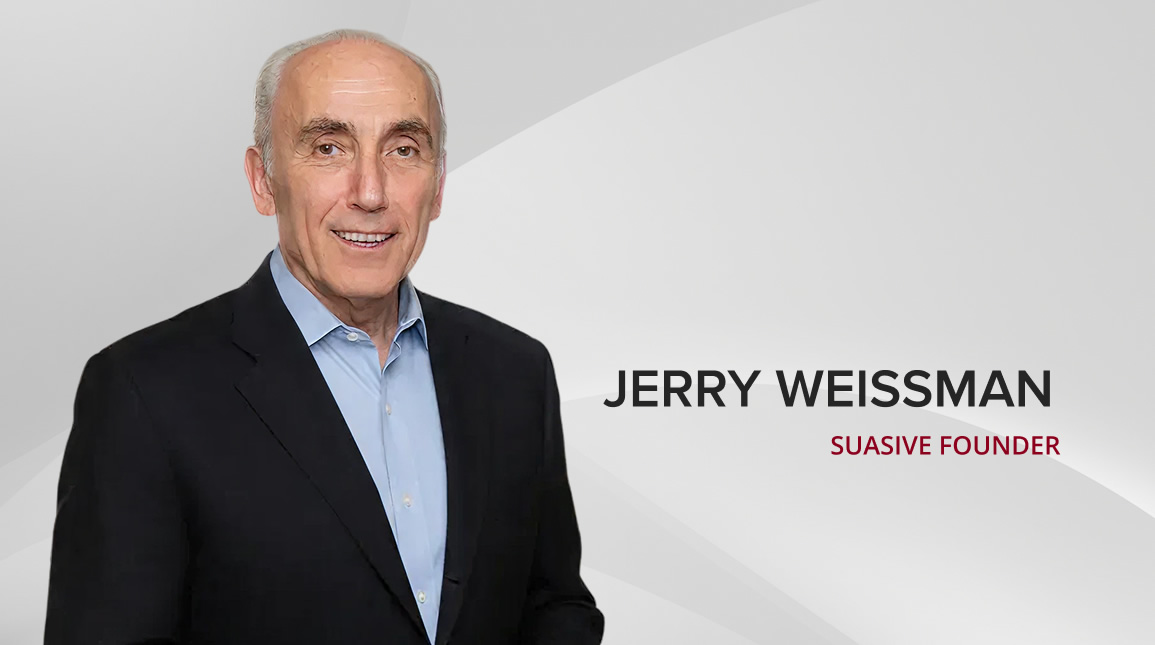
About Jerry Weissman
Jerry Weissman is the founder of Suasive, Inc., a Silicon Valley-based corporate communication and presentation coaching firm. Since 1988, Jerry has coached more than 600 CEOs and senior executives at companies including Netflix, Yahoo, Cisco, Microsoft, eBay, Freshworks, preparing them for IPO roadshows, investor presentations, board meetings, media interviews, and high-stakes Q&A. Earlier in his career, Jerry was a staff producer-director of public affairs programs at CBS Television in New York, where he worked alongside Mike Wallace, and a speechwriter in the Reagan administration. He is the author of multiple books on communication, including The Power Presenter and In the Line of Fire: How to Handle Tough Questions… When It Counts. He writes regularly for Forbes.